If you run a community, you already did the hard part. You have people who show up. They might live all over the world, or they might be a local group, but they share a mission. A simple digital picture can help grow it. I built NFTm so a community like yours can do that with a collection it owns.
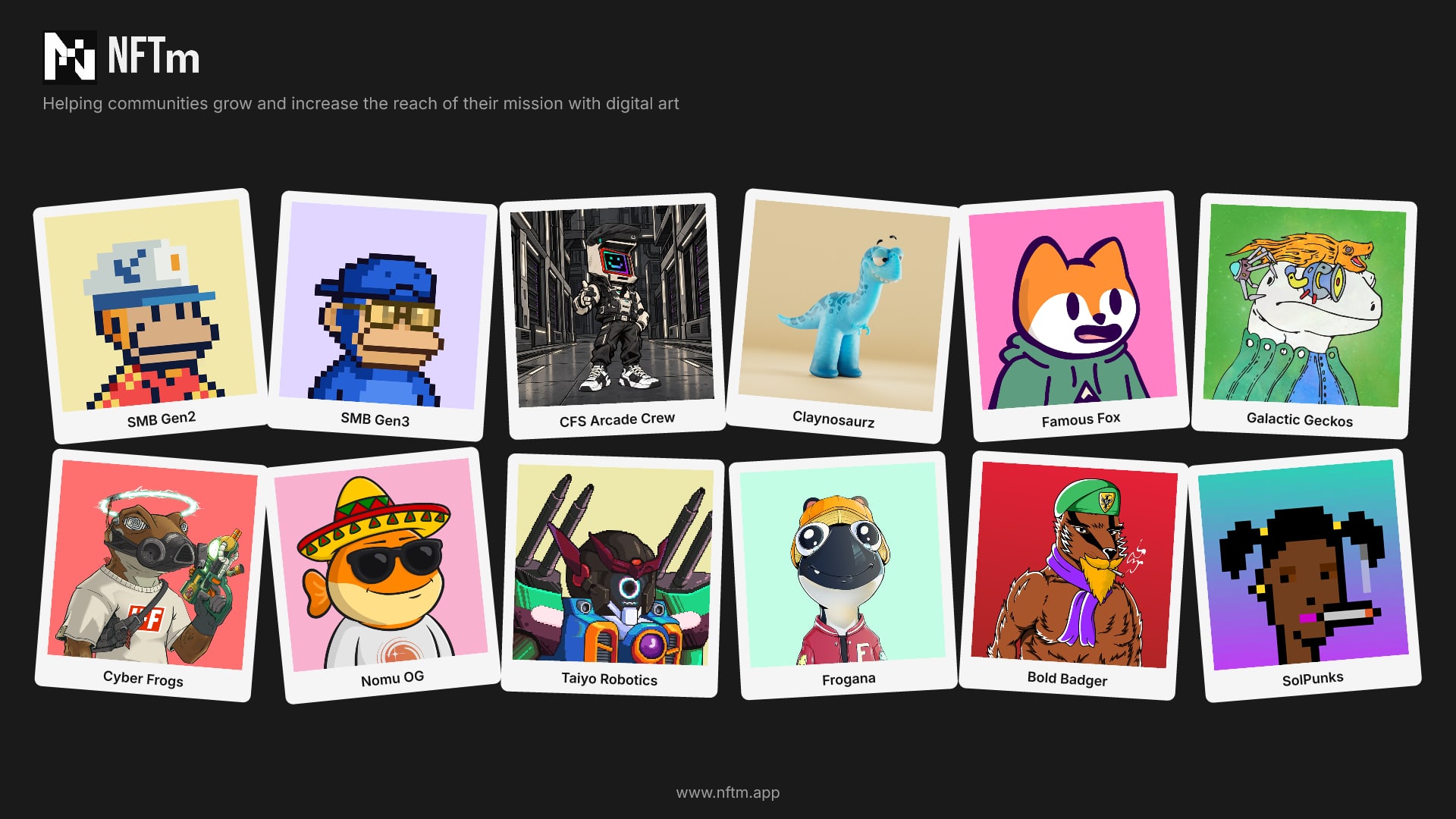
You already have the people
You might see them once a year. You might see them online for a workshop. Maybe it is a local pickleball group. The people show up because they care.
But to a stranger, it looks like a closed door or a clique. There is no face a stranger can recognize as yours. When someone leaves, gets transferred, retires, or moves, there is just an empty chair. There is no simple way for the next person to sit down.
The next gathering still needs a budget. You have more supporters than you know about, but it is not obvious who they are. You cannot show it on a page.
Email lists do not fix that. They are private. Culture is public, or it fades. Your community is real, but it still sometimes feels invisible.
What is an NFT?
NFT stands for non-fungible token. The stuffy words hide a simple idea.
A dollar is fungible. Any dollar spends like any other dollar. A concert ticket with your seat printed on it is not. That ticket is that seat. An NFT is the digital version of the ticket: a unique item, with a public record of who holds it.
That record lives on a blockchain. That means that nobody can quietly rewrite who owns it. You hold the item in a wallet, which is an app that keeps the keys to your stuff. On Solana, the network NFTm uses, that is often Phantom or Solflare.
The picture itself can still be screenshotted. A screenshot is a photocopy. The NFT is the signed original: the chain says this one belongs to this wallet, and it points at a specific image and a set of traits (hat, jacket, background). That is what people mean when they say they own an NFT.
You have seen the social version even if you don't realize it. A cartoon head with a hat. A character in a jacket. Someone uses that drawing as their photo, and their friends have near-copies: same world, different colors. People call that a PFP, a profile picture from a collection. It is a yearbook photo that also works like a club jacket. Yours is unique. But it still looks like it belongs to the group.
Think of a hat or a jacket your group might wear. An NFT collection is the digital version of that, one that still works when the members live in different cities.
A short history
The first NFT that people still point to showed up in 2014, a piece called Quantum, recorded on an early chain. Most of us never saw it.
The idea became a scene in 2017 on Ethereum. Larva Labs released CryptoPunks: 10,000 tiny pixel characters. People started using them as their face online. That same year CryptoKitties let you collect and breed cartoon cats. It was silly on purpose, and it jammed the network because so many people wanted one. That was the moment a lot of crypto natives learned that a picture could be an object on the ledger, not just a file in a folder.
In 2021 the rest of the world heard the word. Auction houses sold digital art. Profile picture clubs got huge. On Solana, a set of cartoon monkeys called Solana Monkey Business pulled a lot of us in. Holders formed MonkeDAO, a community that still runs grants, events, and a mentorship program. I sit on that board. The monkeys were the jacket. The DAO was what the jacket made possible: people who could find each other, vote, and build.
Brands that were not crypto companies showed up too. Reddit sold collectible avatars that people used as their pictures on the site. Millions of people still wear those. The NBA did it with short clips of plays, like trading cards for fans who had never bought a digital collectible. TIME magazine made TIMEPieces and used the money for the publisher and for charity.
CryptoPunks, CryptoKitties, and MonkeDAO were born on-chain. Reddit, the NBA, and TIME already had fans. The pictures gave both kinds of group a way to be seen and to publicly support the community.
How NFTs work
A community (or an artist) makes a family of pictures. Same world, different outfits. Each picture gets a record written to the blockchain. That first write is the mint. The record says the item exists, lists its traits, and names the wallet that owns it. The image file usually sits on a public host. The chain holds the deed that points to it.
After the mint, the NFT lives in the collector's wallet, not in a company's account. If they sell it or give it away, the chain updates the owner. That later sale is how a new person can join even after the first wave is over. You can look up the history. You do not have to trust a private spreadsheet.
On NFTm that shows up as a store the group runs. Holders still keep the items in their own wallets. The page is just where the collection's face lives.
If you are the person who already has the people, the work looks like this:
- Pick a family of pictures. Same world, different outfits. This is the fun, creative part. The art should represent your community.
- Let each member claim one or more. That claim is the mint into their wallet. Charge a little if you want to use it for fundraising. Give the first wave away if you want the door wide open.
- Put the collection on a page the group owns. People will use the picture as their avatar. Print it on stickers and shirts. When someone leaves, they can pass their piece to a new regular. The public record is how everyone sees who the most active supporters are.
That is identity, a little fundraising, new people finding you, and pictures that travel when members use them as their avatar online. You can use them for merch, an invite for the next member, and a roster of who actually cares. It is the culture of your community, for everyone to see.
What it looks like when it works
The pictures become something that is both mine and obviously ours. They can help fund the next community event and grow your mission. Art on phones and on hats. Digital identity for a real community, with a public trail instead of a private list.
I help communities grow and fundraise using digital art. If you have a community, or want to start one, take a look at For Collections and let me know if I can help you launch an NFT for your group.